Off-Road
Shock
Selection Guide
The Right Shock. The Right Setup. The Right Results.

Choose How You Off-Road

Choosing the right off-road shock depends on how you drive, what your vehicle weighs, how fast you run, and how much tuning control you need. This guide breaks down shock setups by motorsport, ranking them in levels from basic entry-level packages to advanced race-ready setups. It also includes WOD-curated shock combinations with ratings for budget, packaging, heat control, tuning potential, ease of tuning, and race performance to help you decide which shock package makes the most sense for your rig.

** Select the type of riding you do most, and we’ll point you toward the right shock setup. **

Suspension Accessories & Mounts

Understanding Shock Selection

Shock Size: 2.0 vs 2.5 vs 3.0

Shock Size: 2.0 vs 2.5 vs 3.0

Shock size usually refers to the shock body diameter, and that size affects oil volume, heat control, damping capacity, and packaging. A 2.0 shock is compact, lightweight, and easier to fit on Jeeps, UTVs, trail rigs, and lighter crawlers. A 2.5 shock is the best all-around size for many off-road builds because it adds more oil volume, better heat control, and stronger damping without becoming too difficult to package. A 3.0 shock is built for heavier, faster, and more dedicated race vehicles that need maximum damping capacity, impact control, and heat management.

Coilover Shocks

Coilover Shocks

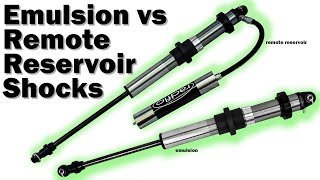
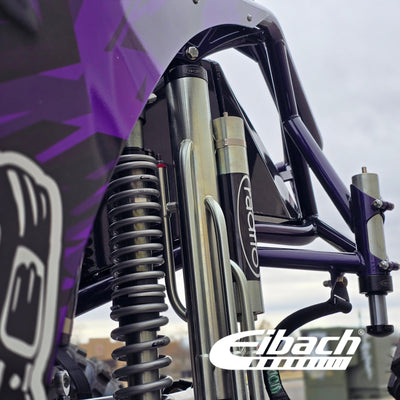
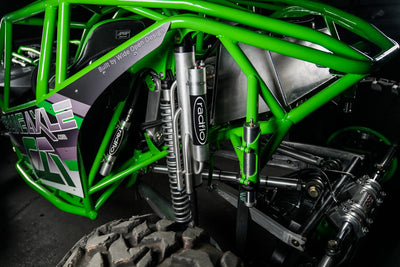
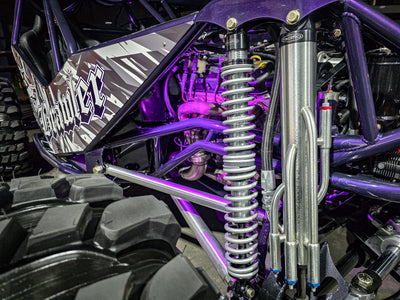
Coilover shocks combine the coil spring and shock absorber into one suspension unit. The spring supports vehicle weight and sets ride height, while the shock controls how fast the suspension compresses and rebounds. Emulsion coilovers are simple and budget-friendly, while remote reservoir coilovers add oil volume and better heat control for harder use. For most off-road builds, the coilover is the foundation of the shock package.

DRT Internal Bypass Shocks

DRT Internal Bypass Shocks

DRT internal bypass shocks are built for drivers who want more control without adding a separate external bypass shock. They use internal bypass zones to create more support deeper in the shock travel while keeping the package clean and compact. This makes them a strong fit for Ultra4-style rigs, tight chassis packaging, and builds where noise, clearance, and simplicity matter. They offer more control than a standard coilover, but with less external tuning access than a traditional bypass shock.

External Bypass Shocks

External Bypass Shocks

External bypass shocks are used when maximum suspension control and tuning range matter most. The external bypass tubes allow the shock to be tuned in different zones of travel, helping improve small-bump comfort, chassis control, and bottom-out resistance. They are commonly paired with coilovers on desert racing, Ultra4, rock bouncer, and high-horsepower off-road builds. This is the more advanced setup when the vehicle has room for a second shock and the driver wants race-level control.

Technical Resources